Building
Digging down: stairs, ramps, aquifers and caverns
Dwarves are made for digging, and the mountain rewards them for it. It also hides water-soaked rock, unsupported ceilings and whole hidden worlds beneath your feet.
Digging is the first thing your dwarves do and the thing they will do most. Every room, corridor, stockpile and workshop starts as a designation on rock. It is also how you find everything of value: ores, gems, underground water and the vast caverns below. Knowing how to dig well, and when to stop, is fundamental.
Moving between levels
The fortress is a stack of layers, and dwarves need a way between them. Staircases are the standard: an upward stair on one level meets a downward stair on the level above, and a stair that goes both ways lets you build a continuous shaft. Ramps are sloped tiles that let dwarves, carts and creatures walk up or down one level, and they are useful for moving heavy loads and for entrances cut into a hillside.
A central staircase that runs the whole height of the fortress, with rooms branching off each level, is the simplest layout that stays efficient. The rooms and layout page explains why keeping everything close to that spine saves so much walking.
Exploratory digging
Much of what is valuable underground is hidden until you dig next to it. Players often dig long, narrow exploration tunnels through promising rock, spaced so that everything between them is revealed. This finds ore veins and gem clusters with far less effort than hollowing out whole levels. Once you have found something worth mining, you can come back for it. The stone, ore and metal page describes what you might find.
Cave-ins
Stone needs support. If you dig out everything around a section of ceiling or floor so that it is no longer connected to anything, it collapses. A cave-in can injure or kill dwarves beneath it, and the dust and debris cause further problems. The practical rule is to think about what is holding up whatever you are digging around. Channels, which dig out a floor from above, are the usual way people accidentally cut something loose. Leaving support pillars in large rooms, or digging them out carefully and on purpose, avoids most surprises.
Why an aquifer blocks you
At some sites, a layer of soil or rock is saturated with water. Dig into it and water begins to seep into the tunnel, tile after tile, without end. The official wiki's aquifer page explains that an aquifer is an underground band of soil or rock carrying groundwater, which begins to seep as soon as it is opened, and it stresses that aquifers cannot be drained, since the supply is limitless and even a single isolated tile leaks forever. That is why an aquifer feels like a wall: you cannot simply pump it dry and carry on.
The same page explains that the game warns you before you breach one, marking the rock as damp, and that aquifers come in lighter and heavier forms, with heavy aquifers producing water faster and being much harder to manage. It describes light aquifers as by far the more common kind.
The real thing works on a similar principle. Wikipedia's article on aquifers defines one as an underground layer of water-bearing material, such as permeable or fractured rock, gravel, sand or silt, and notes that people draw on them through wells. In the game, as in life, an aquifer is a resource as well as an obstacle.
Getting past one
The official page describes many techniques, from careful one-level-at-a-time digging that walls off each exposed tile before the water spreads, to more elaborate methods using freezing, cave-ins or magma. Details differ by version, and the official wiki is the place to read them. For a first fortress, the simplest approach is often to choose a site without one, or to live above it. Once you are comfortable with water management, getting through an aquifer becomes a satisfying engineering problem rather than a nightmare.
Using one
An aquifer is also an endless, reliable water supply. A well sunk into it never runs dry, which makes it valuable for the hospital and in sieges. Some players breach a small section on purpose, contained within walls and a floodgate, precisely to have that supply.
The caverns
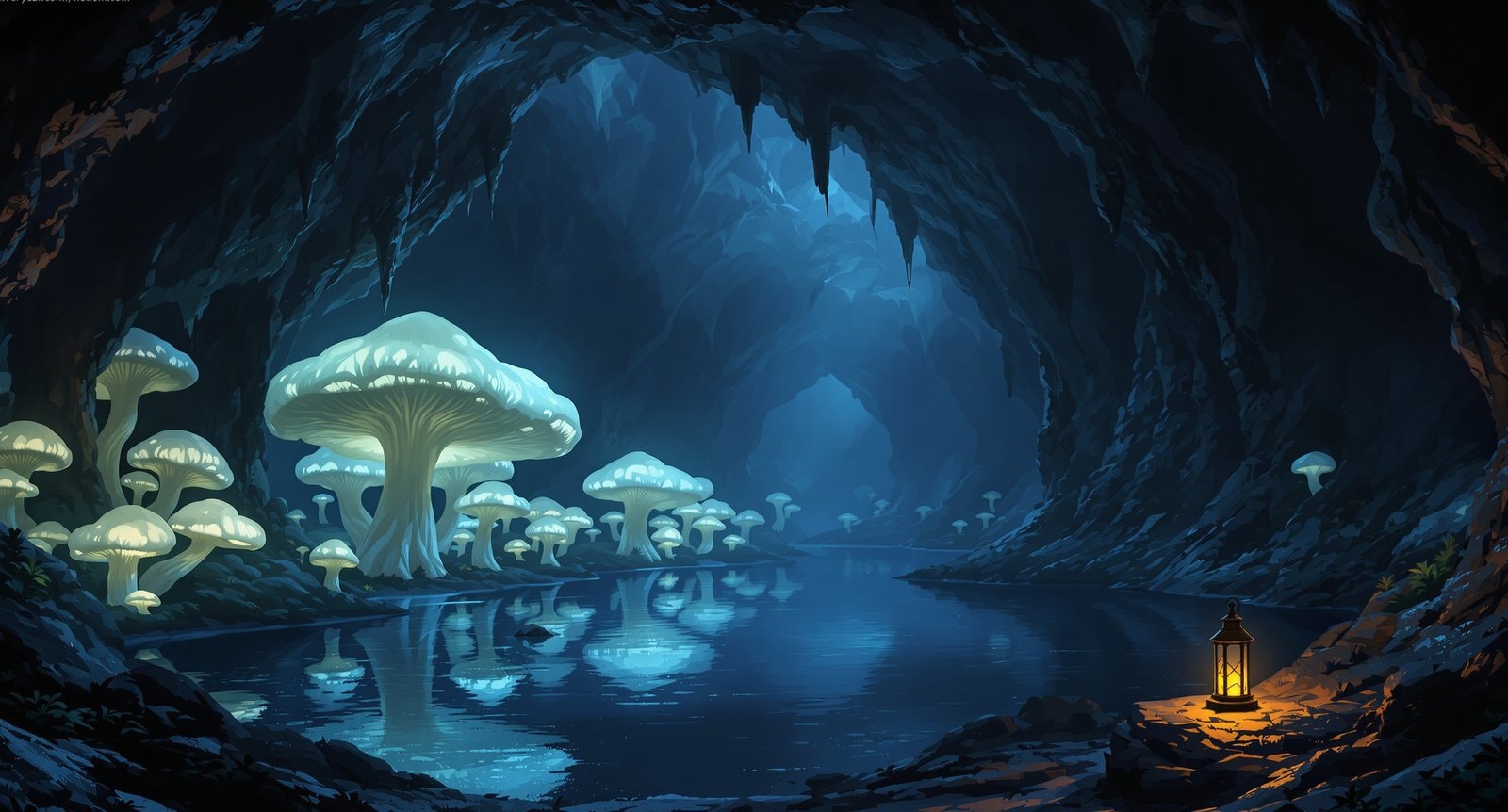
Deep beneath the fortress lie huge natural caverns, typically in several layers. They are dark, often vast, and home to strange plant life: towering fungus in place of trees, pale mosses, underground lakes and rivers. They also hold creatures that have never seen daylight, some harmless and some very much not.
Breaking into the first cavern is a major moment in a fortress's life. It opens up new resources, including fungus that can be cut like timber, soil for farming, water and wildlife. It also opens a door the other way. Anything living in the caverns can now find its way into your fortress, and from time to time something large and hostile wanders up. Many players wall off the breach, or put a door or a bridge on it, before exploring further.
What lies deeper still
Below the caverns, the rock grows hotter and eventually meets the magma sea. Players dig down to it for fuel-free forges and furnaces, which the magma and forges page covers. The deepest reaches of the world hold secrets the game prefers you to discover for yourself. The Steam store page's own description of the game warns players to beware of digging too deeply, and that advice is worth taking seriously until you know what you are doing.
A digging checklist
- Build a central staircase first and branch from it.
- Explore with narrow tunnels; mine out what you find later.
- Think about support before channelling or hollowing large areas.
- Stop and plan when you see damp stone.
- Seal cavern breaches until you are ready for what lives there.