The world
Trade and the fortress economy
Your mountain cannot provide everything. Caravans can. A fortress that trades well gets metal it cannot mine, animals it cannot breed and goods it has never learned to make.
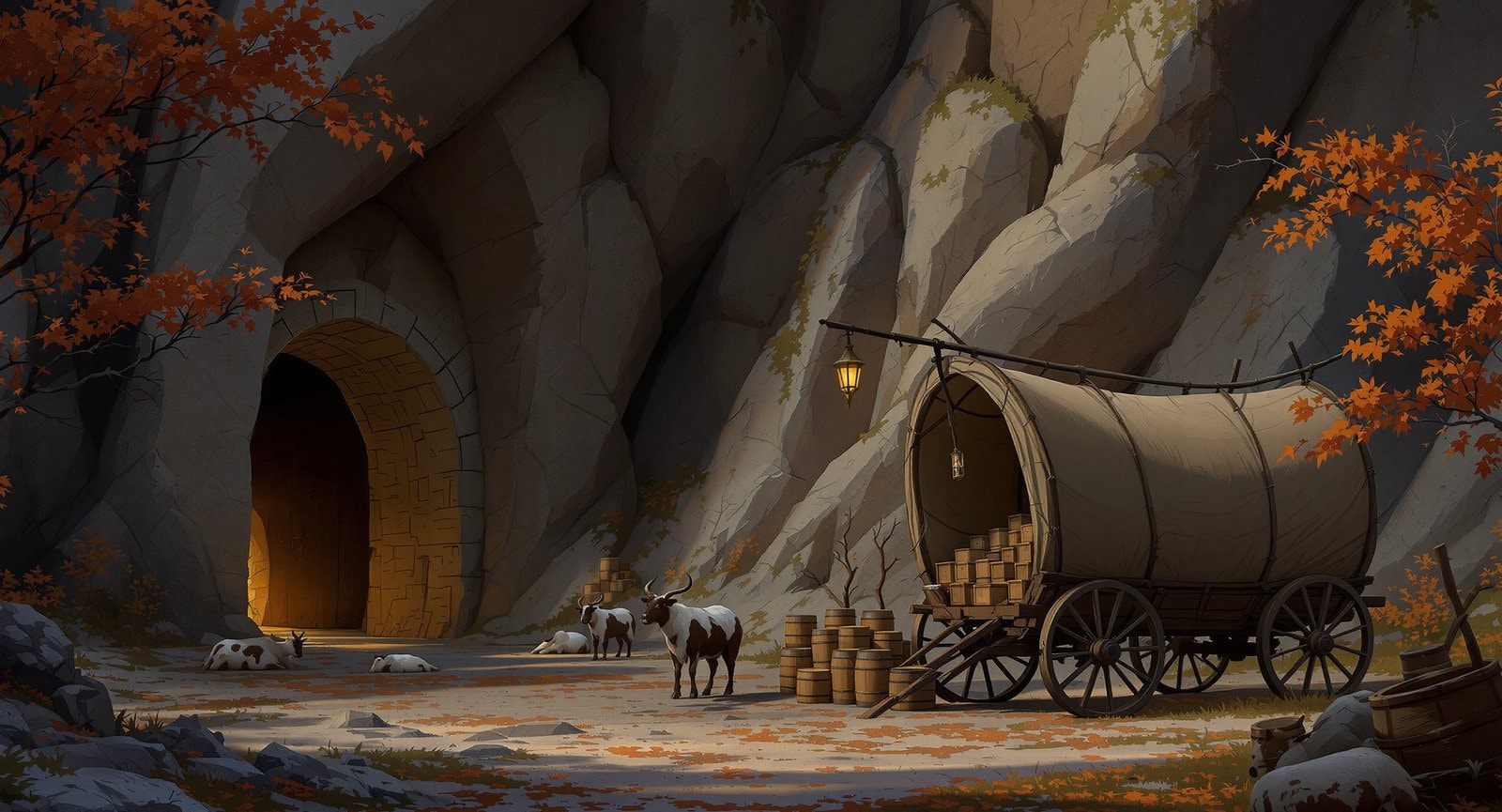
Trade connects your fortress to the wider world. At certain times of the year, caravans from friendly civilisations arrive with goods to barter. What they bring, and what they want in return, depends on who they are and what they have to offer. A well-run trading relationship can cover gaps in your industry, supply rare materials and turn your surplus into something useful.
Why trade
The official wiki's trading page sums up the benefits well: trade lets your dwarves barter excess goods for things they need, possibly things they cannot otherwise get, and can make up for industries you have neglected, supply resources your site lacks, and replace tools lost or accidentally destroyed. It notes that trade generally begins in the first autumn, with the arrival of a caravan from your own civilisation.
In practice, trade is the answer to most material shortages. No iron on your site? Buy it. No trees? Buy wood. No particular gem a moody dwarf is desperate for? The next caravan may carry one.
The trade depot
To trade at all, you need a trade depot, a building where caravans unload and where the bargaining happens. The same official page explains that you also need peaceful relations with at least one civilisation that can reach your site, and that if traders cannot reach your depot when they arrive, they will bypass your fortress that year.
That last point shapes where you put it. The depot must be reachable by wagons, which means a wide enough path from the edge of the map, free of obstacles, with no raised bridge in the way. Many fortresses place the depot just inside the main entrance, so that it is protected but accessible, and put a stockpile of trade goods beside it to save carrying time.
The broker
When merchants arrive, someone must represent the fortress. The official page calls this person the trader, usually your broker. Appointing a broker is not strictly necessary, but it is very helpful. A broker with good social skills and a talent for appraisal gets better deals and can judge what items are worth. Without appraisal skills, it is hard to know whether a trade is fair.
Brokers are drawn from the fortress's population, so pick someone whose other work can wait during a trading visit, because they will spend time at the depot.
What sells
Merchants value goods by their material, quality and decoration. In general terms:
- Crafts made from stone, bone or wood are cheap to produce in large numbers and are a staple trade good for young fortresses.
- Prepared food and drink are valuable and easy to make in quantity once farms are running.
- Finished goods of high quality, especially from skilled workers, fetch much more than rough items.
- Decorated items, set with gems or covered in fine work, add value on top of the base material.
- Precious metals and gems are valuable almost everywhere.
Different civilisations have different tastes and scruples. Some will be offended by certain goods, or by goods made from certain materials, and a trade that insults the visitors can sour relations. Read what the merchants say, and do not push items they clearly dislike.
Item value, in general
An object's value in the game is built up from several parts: the base value of the kind of object, the material it is made from, its quality, and any decoration added to it. A simple mug of common stone is worth little. The same mug made by a master from a rare stone and set with gems is worth a great deal. This is why skilled craftsdwarves matter so much to the economy, and why a legendary artifact from a strange mood adds so much to a fortress's wealth.
Wealth has consequences beyond trade. A richer fortress attracts more migrants, more demanding nobles and, eventually, more attention from those who would like to take its riches. The military page explains why that matters.
What to buy
A few purchases pay off repeatedly: metal bars or ore your site lacks, animals you want to breed, seeds for crops you cannot otherwise grow, cloth and leather for clothing, and any rare material a craftsman or noble needs. Buying food and drink can bridge a bad harvest, as the farming page notes.
Relations with other peoples
Trade is also diplomacy. Caravans often bring representatives who want to discuss agreements, and your fortress's behaviour affects how other civilisations see it. A fortress that trades fairly and keeps visitors safe builds good relations; one that robs caravans or offends visitors makes enemies. The world and legends page explains how those civilisations came to exist, and how long they remember.
A simple trading routine
- Build a depot near the entrance, reachable by wagon.
- Appoint a broker early.
- Keep a stockpile of crafts and prepared food next to the depot.
- Make a shopping list before the caravan arrives.
- Keep the drawbridge down while merchants are expected.