Dwarves
Skills, labours and workshops
You do not order a dwarf to make a table. You make a table possible and let a dwarf who is allowed to make tables decide to do it. Understanding that difference is the key to a productive fortress.
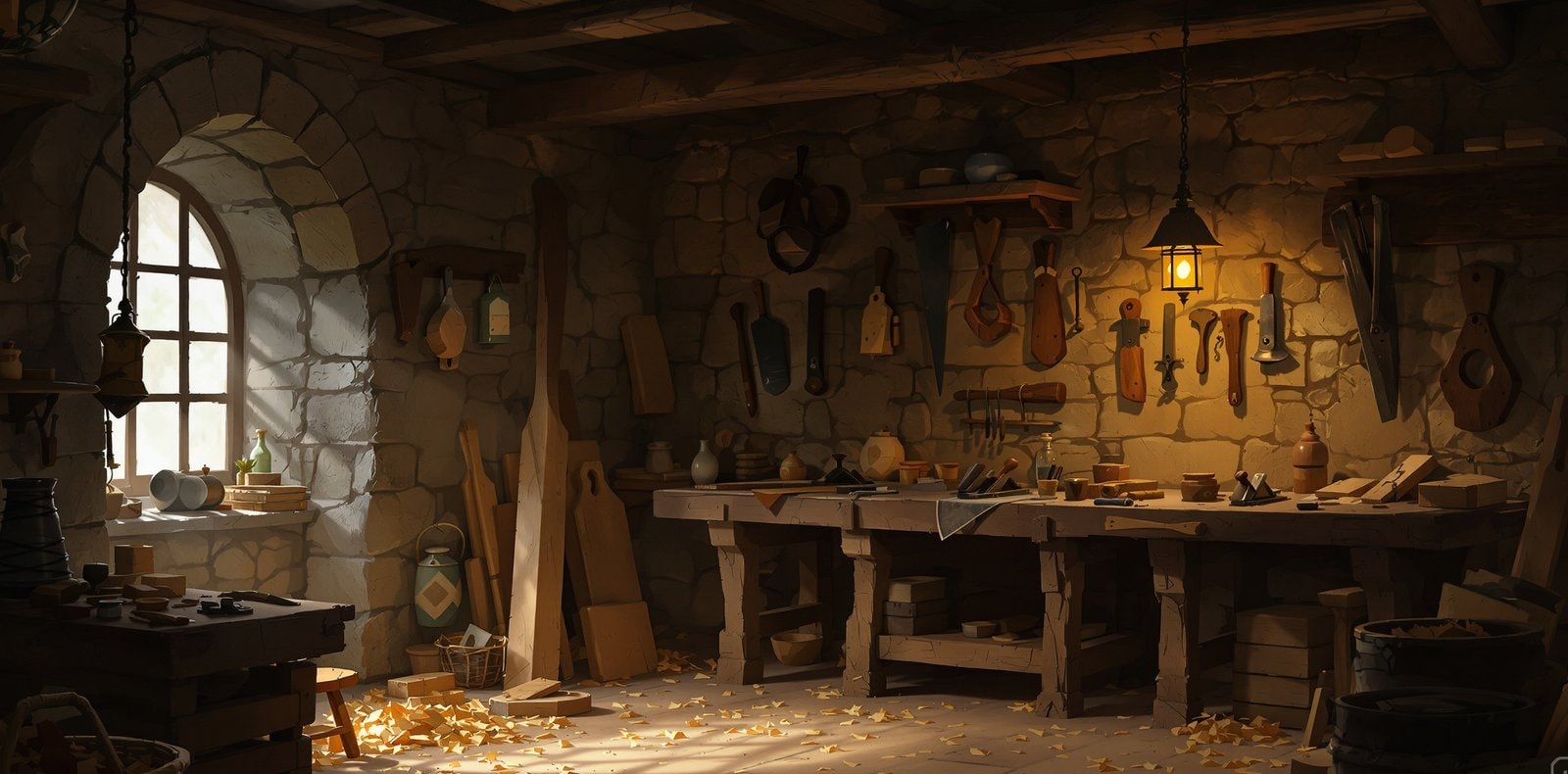
Dwarf Fortress is a game of indirect control. You mark out what should be dug, place workshops, queue up jobs and set rules, and the dwarves decide among themselves who does what and when. What makes this work, and what makes it confusing at first, is the system of skills and labours that determines which dwarf may take which job, and how good they will be at it.
Labours: who is allowed to do what
Every kind of work in the fortress belongs to a labour: mining, woodcutting, carpentry, masonry, brewing, cooking, farming, hauling, and many more. Each dwarf has a set of labours they are allowed to perform. A job will only ever be done by a dwarf who has the relevant labour enabled. The official wiki's quickstart guide makes this point directly: you designate things to be done, and dwarves with the appropriate labour assignments decide what to do, so if nobody is allowed to mine, or nobody has a pick, the mining never gets done, and the game will not always tell you why.
That last observation explains a huge share of beginner frustration. When a job sits untouched, the first question is always: is anyone allowed to do it, and do they have what they need?
Skills: learning by doing
Skills are separate from labours. A skill is how good a dwarf is at a kind of work, and it rises with practice. A dwarf who mines every day becomes a better miner; a dwarf who carves stone every day becomes a better mason. Higher skill means faster work and, for crafted items, higher quality. Over years, a fortress's best workers become legendary.
This has a practical consequence: the more a dwarf does one thing, the better they become at it. If you want good weapons, let one or two dwarves do all the weaponsmithing rather than spreading it among everyone.
Specialists and generalists
Every fortress balances two needs. Specialists, dwarves who do one skilled job, produce the best work and improve fastest. Generalists, dwarves who can turn their hand to many simple tasks, keep the fortress flexible and make sure the hauling gets done.
A common pattern is to have a small number of skilled specialists in the important crafts, each allowed only their speciality and perhaps a few light duties, and a larger pool of general workers who haul, gather and fill in wherever needed. As migrants arrive, look at their existing skills and assign them accordingly. Someone who arrives as a capable brewer should probably brew.
One warning: specialists who are also allowed to haul will spend much of their time hauling. That may be what you want in a small fortress, but in a large one it wastes your best people.
The main workshops
Workshops are where raw materials become useful things. A few of the most important in almost every fortress:
- Carpenter's workshop
- Beds, barrels, bins, doors and furniture from wood.
- Mason's workshop
- Doors, tables, chairs, coffins and statues from stone.
- Craftsdwarf's workshop
- Small crafts, mugs, toys and ornaments, many of which become trade goods.
- Still and kitchen
- Drink from plants, and prepared meals from ingredients.
- Butcher's and tanner's shops
- Meat, fat and hides from animals, and leather from hides.
- Smelter and forge
- Metal bars from ore, and weapons, armour and goods from bars.
- Mechanic's workshop
- Mechanisms for levers, traps and machines.
- Jeweller's workshop
- Cut gems, and gems set into other objects.
Craft chains
Very few finished goods come from a single step. More often, one workshop's product is another's raw material. A suit of armour starts with a miner digging ore, a hauler moving it, a smelter turning it into bars, fuel from a charcoal burner or heat from magma, and finally an armourer at a forge. A good meal starts with a farmer, a gatherer or a butcher, passes through a kitchen, and ends in a barrel near the dining hall.
Thinking in chains helps you find bottlenecks. If nothing is coming out of the forge, the problem may be at the smelter, in the fuel supply, or in the mine. The stone, ore and metal page follows the metal chain; the farming page follows the food chain. Placing each workshop next to the stockpile it draws from, as the layout page recommends, shortens every link.
Standing orders and work orders
Beyond individual jobs, the game lets you queue repeating work and set general rules for the fortress. Players use these to keep essentials flowing without constant attention: a steady supply of drink, a stock of barrels, mechanisms always available. The exact controls differ between releases, so check the current version's interface, but the principle is simple: automate the things you would otherwise forget.
Managing many dwarves
In a large fortress, tracking every dwarf's labours by hand becomes tiring. The modern release includes better tools for this than older ones did, and the community has long made labour-management utilities too, described in general terms on the utilities and tools page.
A healthy workforce
Finally, remember that skill is not the only thing that affects work. A dwarf who is stressed, tired or grieving works poorly or not at all. The fastest way to improve productivity in a struggling fortress is often not to reassign labour but to fix the dining hall and the bedrooms, as the needs and happiness page explains.