Start
Your first fortress: choosing a site, the first dig and the first winter
Your first fortress will probably fail. The goal is to make it fail later, more interestingly, and for reasons you understand.
Every veteran has a graveyard of early fortresses behind them, and every one of those taught something. Treat the first attempt as a practice run with stakes. You are learning how the game thinks: what the dwarves do on their own, what they need you to decide, and how small choices early on shape everything that happens months later. The official wiki's quickstart guide opens on exactly this note, telling new players to expect to lose a few fortresses and to remember how each one was lost.
Choosing where to settle
Before any digging, you choose a patch of the world map to settle. This is the most consequential decision of the game, and also the one new players rush. A good first site has a few simple qualities: rising ground or a hillside you can tunnel straight into, some trees for wood, a source of water that is not a raging river, soil somewhere for farming, and a mild climate. The game shows you what each region contains before you commit, so read it slowly.
What you want to avoid at first is anything described in dramatic terms. Evil or savage regions are exciting for experienced players and exhausting for new ones. Frozen wastes mean no easy water and no surface crops. Deserts mean no trees. A site with a water-bearing rock layer can make digging down miserable, which is explained on the digging and aquifers page. None of these are forbidden, but each one adds a problem you have not learned to solve yet.
What to bring
You arrive with a small group of dwarves, some tools and a cart of supplies. The game offers a default loadout, and for a first fortress it is perfectly sensible. The underlying logic is worth knowing, though. You need picks to dig, an axe to cut trees, food and drink to last until farms produce, and a few people who can do the jobs that matter most early: mining, woodcutting, carpentry, masonry, farming and brewing. Skills grow with practice, so a starting dwarf who is merely competent will become good soon enough.
Bring seeds. Bring more drink than you think you need. Do not spend your starting budget on weapons and armour for a fight that will not come for a long time; a door that shuts is the best early defence you can have.
The first dig
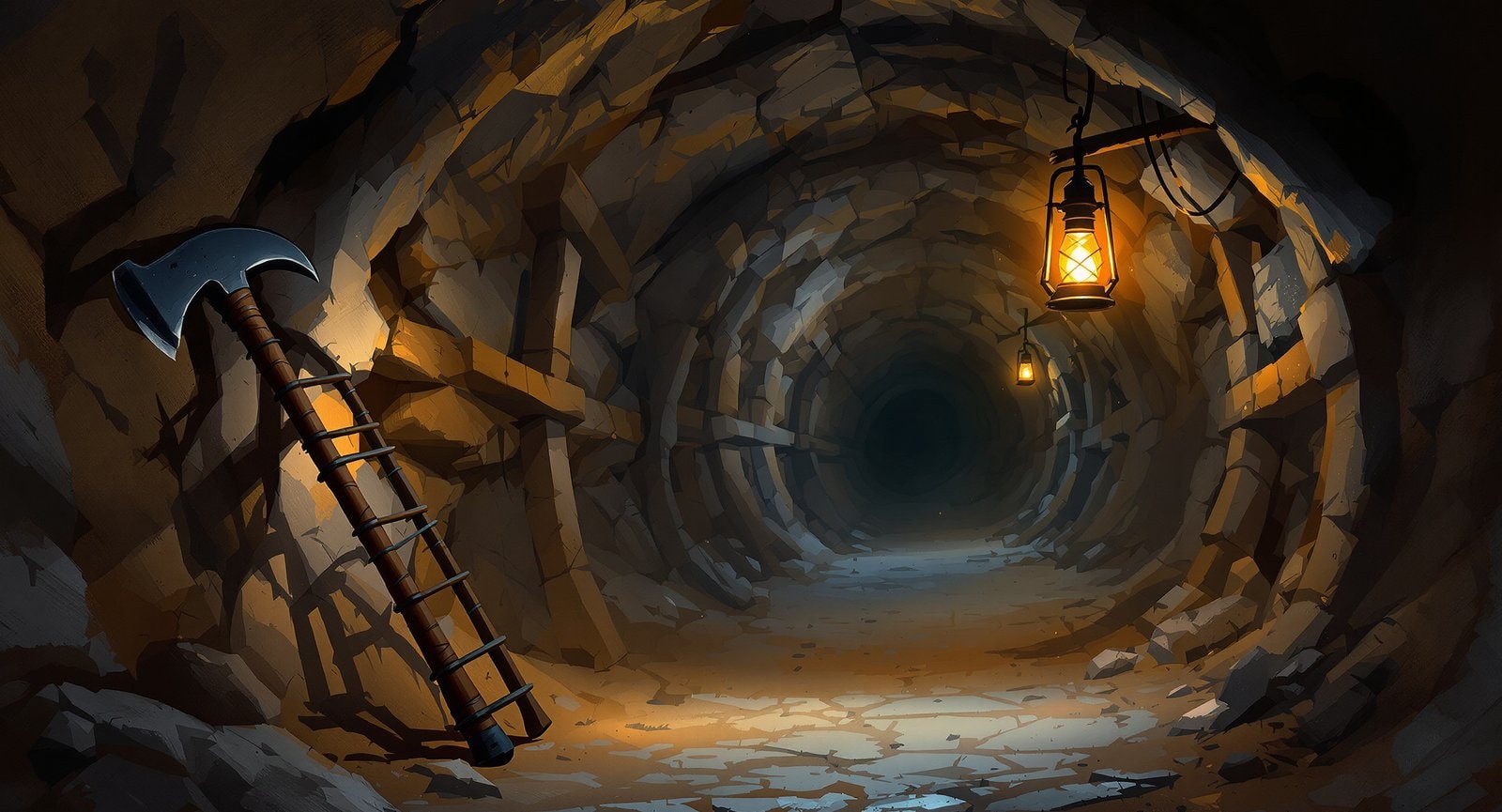
The moment you land, the clock is running. Seasons pass, and your supplies are sitting in the open. The first job is to get everyone underground. Dig a short entrance corridor into the hillside, then a staircase down a few levels, and open up a large rough room for storage. Underground space is safe from weather, easy to defend and, once smoothed and furnished, pleasant to live in.
Keep the first layout compact. Long winding tunnels mean long walks, and every walk is time a dwarf is not working. A central staircase with rooms opening off each level is the simplest shape that stays useful as the fortress grows, and the rooms and layout page explains why short distances matter so much later on.
The first workshops
A handful of workshops carry an early fortress. A carpenter makes beds, barrels and bins from wood. A mason turns rough stone into doors, tables and chairs. A still turns plants into drink, and a kitchen turns raw ingredients into meals that keep. A craftsdwarf's workshop turns spare stone into small trade goods, which will matter when the first caravan arrives. Place these close to the stockpiles that feed them, and close to where their products are needed.
Stockpiles deserve early attention. Dwarves haul everything, all the time, and a fortress with no organised storage becomes a floor strewn with stones, logs and discarded socks. Set aside areas for food, drink, wood, stone and finished goods, and your haulers will keep things tidy for you.
Food and drink
Dwarves need to eat and they strongly prefer alcohol to water. An underground farm plot on soil, or on stone that has been muddied, grows crops without caring about the seasons. One or two small plots, planted and tended, plus a still to turn the harvest into drink, is enough to carry a small group. Fishing and gathering wild plants help at the start. The full picture is on the farming, food and drink page.
A first bedroom block
For the first months, a shared dormitory is fine. Everyone sleeps in one room, and nobody minds much. Once the essentials are running, give each dwarf a small room with a bed, and later a chest and a cabinet. Private bedrooms are one of the cheapest ways to keep people content, and a dwarf who sleeps well is a dwarf who does not throw a tantrum in the dining hall.
Surviving the first winter and the first year
Winter is where rushed starts come undone. Rivers freeze, surface plants die back and outdoor work slows. If the fortress has a roof, farms under it, barrels of drink in storage and a door that shuts, winter is merely quiet. If the food is still sitting in a pile outside, it is a problem.
By the end of the first year you will usually have met visitors of several kinds. Migrants arrive and need beds and jobs. A trade caravan comes with goods to swap, which the trade page covers. Wildlife wanders in. None of this needs to be frightening if the basics are in place.
What to expect
Things will go wrong. A miner will dig into a river. A cat will somehow cause a crisis. A dwarf will be struck by inspiration at the worst possible time. This is not failure of play so much as the game working as intended, and the community long ago decided that disaster is a feature. When your first fortress falls, read losing is fun, take one lesson from what happened and embark again. The second fortress is always better.