The world
World generation, history and legends
Before you place a single dwarf, the game builds a world and then lets it live through centuries of history. Your fortress is one small chapter in a very long book.
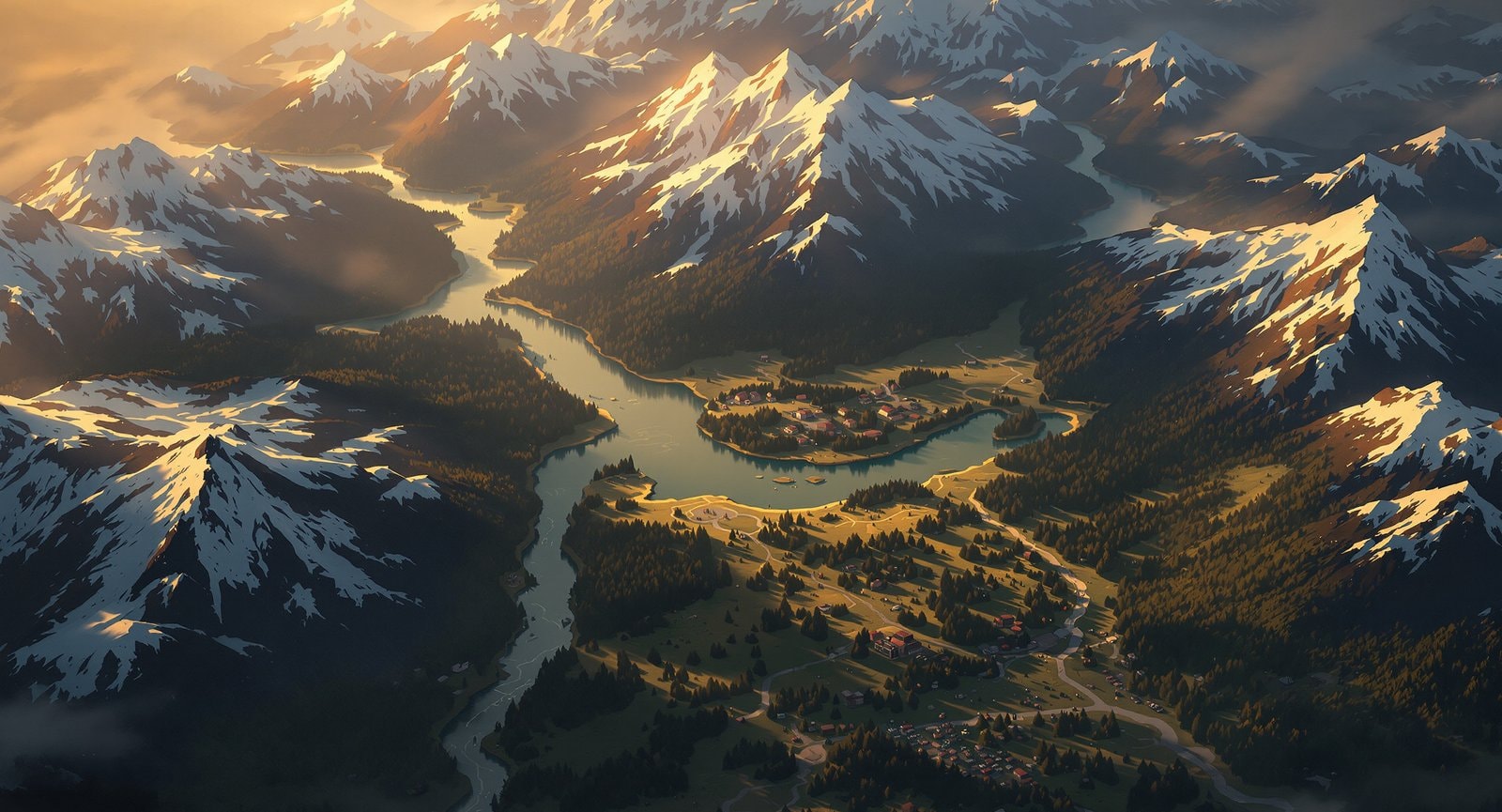
Most games give you a map. Dwarf Fortress gives you a world with a past. Before play begins, the game raises continents and oceans, carves rivers, sets climates and biomes, and then populates the whole thing with peoples who found cities, fight wars, forge alliances and tell stories about each other. Only when all of that is done do you choose a place to settle. Understanding this process explains a great deal about the game.
How a world comes to be
The official wiki's world generation page describes this stage as the heart of the game rather than a nuisance. While you wait, it explains, an entire fantasy world with its own geography, history and even language is created: civilisations rise, wage war, fall and rise again, and countless characters, each with their own appearance and personality, live their lives, some quietly and some shaping history. The same page stresses that this activity continues after the world is made, while you play.
The process starts with the physical world: heights, rainfall, temperature and drainage, which together decide where mountains, forests, deserts and oceans lie. Rivers find their way to the sea. Biomes settle into place. Then the peoples arrive and history begins to run.
Choosing the kind of world
You can accept a default world or adjust the settings. The main choices, in general terms, are size, how long history runs before you start, and how many civilisations and creatures populate the world. A small world with a short history is quick to make and light on your computer. A large one with a long history is richer and slower. The performance page explains why a modest world can keep your fortress running more smoothly without making it dull.
Procedural generation
This way of building worlds from rules and randomness has a name. Wikipedia's article on procedural generation describes it as creating data by algorithm rather than by hand, and notes that some games create their worlds from a random seed, or one supplied by the player, so that every playthrough is different; it names Dwarf Fortress among its examples. What sets the game apart is how far it takes the idea. It does not just produce terrain; it produces people, events and a record of them.
Civilisations and peoples
A world contains several kinds of civilised peoples, each with its own culture, preferences and attitudes. Dwarves live in mountain halls and prize craft and stone. Other peoples build forest retreats, towns, or dark fortresses of their own. Their relationships are shaped by history: old wars, broken treaties, shared enemies. When a caravan visits, or a siege arrives, it comes from one of these peoples, with reasons rooted in that history. The trade and military pages cover what that means in practice.
Reading the legends
All of this history is recorded, and you can read it. The legends view lets you browse historical figures, civilisations, sites, artifacts, wars and events, following threads from one to another. You might trace the lineage of your fortress's founders, discover which ancient hero forged the sword a caravan is selling, or learn why a particular civilisation hates yours. Many players find this as absorbing as fortress play itself.
Your own fortress becomes part of that record. The deeds of your dwarves, the artifacts they make and the battles they fight are written into the world's history, which is why returning to a world after a fortress falls, whether by reclaiming it or visiting in adventure mode, can feel like visiting a real place with a real past. It is also why the fortress chronicles on the stories page often draw on the legends for background.
Myths and the world's beginnings
Modern releases also give worlds their own mythologies and creation stories, with gods and forces that shape the world's nature. These add a further layer of flavour and, occasionally, of danger. The details are best discovered in play.
Dwarves in folklore
The game's dwarves draw on a long tradition. Wikipedia's article on dwarves in folklore describes the dwarf as a supernatural being of Germanic folklore, commonly but not exclusively presented as living in mountains or stone and as a skilled craftsman, and notes that later folklore links some dwarfs to smith-beings living in hollow mountains or caves. It also records that dwarves remain a fixture of modern fantasy. The game's miners, masons and smiths, labouring in the heart of a mountain, are recognisably descended from those stories, with a great deal of beer added.
Using the world as a player
- For a first game, a small or medium world with a moderate history is plenty.
- Read a little of the legends before you settle; knowing your neighbours helps.
- Keep a world you like. Several fortresses in the same world build on each other.
- When a fortress falls, remember that the world goes on.