Building
Rooms and fortress layout
A good fortress is not the biggest or the grandest. It is the one where dwarves spend their time working and resting instead of walking from one end of the mountain to the other.
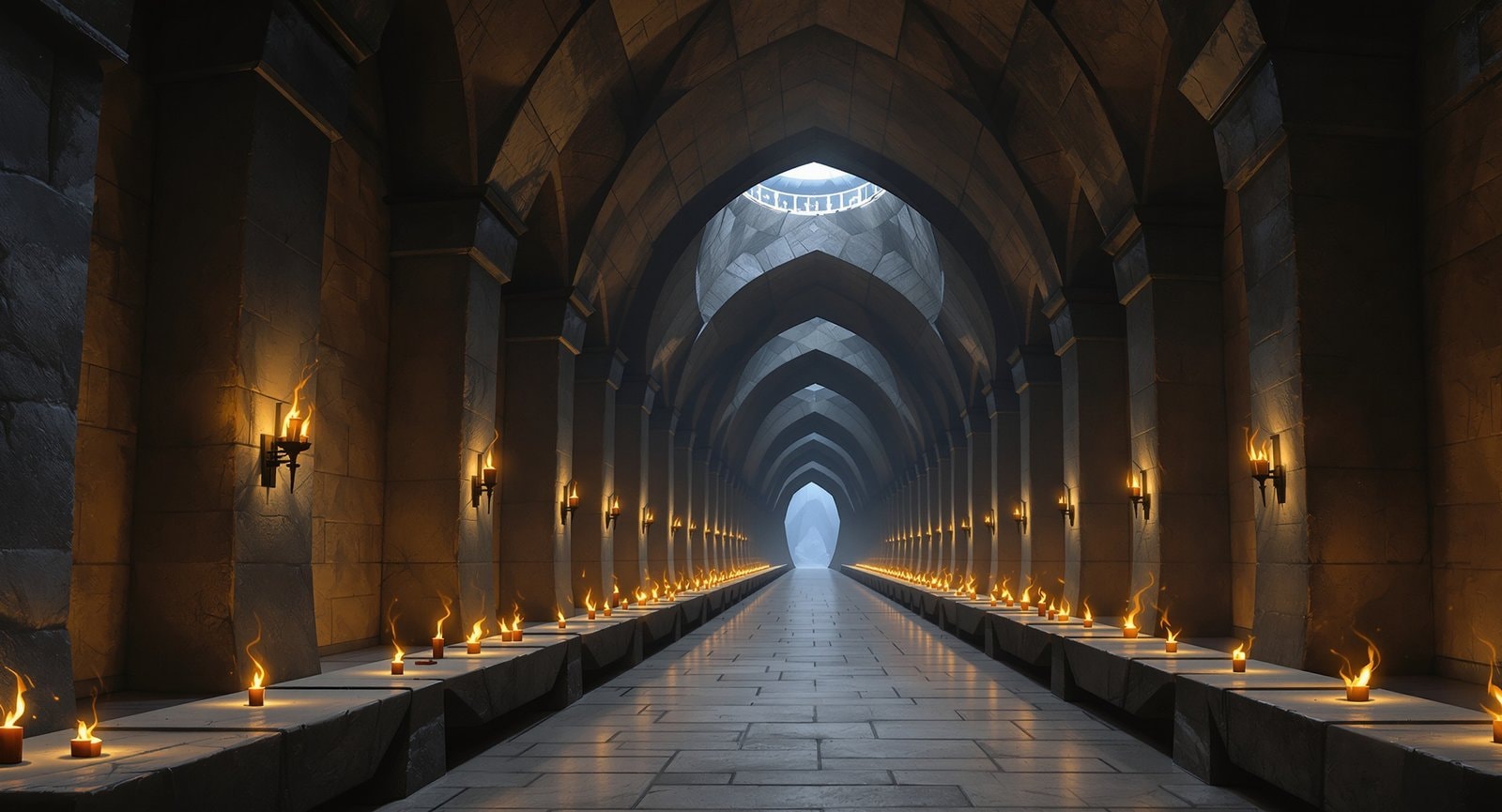
Dwarves walk everywhere. They walk to fetch materials, to carry products, to eat, to drink, to sleep, to pray, to visit friends and to deliver things to stockpiles. Every step is time. A fortress laid out with that in mind runs faster, feels calmer and is easier to defend. This page covers the main kinds of room and the principle that ties them together: keep things that are used together close together.
The compact core
The single most useful idea in fortress design is a compact core. Pick a central staircase and arrange the fortress around it, level above level, so that the dining hall, the main stockpiles and the busiest workshops are all within a short walk of each other and of the stairs. A fortress that sprawls outwards on one level forces dwarves into long journeys. A fortress that stacks its functions vertically, close to a shared shaft, keeps those journeys short.
Bedrooms
At the start, a shared dormitory is fine. As the fortress settles, individual bedrooms become one of the most effective and cheapest ways to keep dwarves content. The official wiki's bedroom design page points out that all a dwarf strictly needs to sleep is a bed anywhere, but that a happy dwarf wants a room of their own with a bed, a chest and a cabinet, and is further pleased when that room has walls all round and a door. It lists simplicity, ease of marking out, efficiency, appearance and distance from noise as the factors to weigh.
That last factor is often forgotten. Mining, workshops and busy corridors are noisy, and dwarves sleep badly next to them. Put the bedroom block somewhere quiet, away from the main digging and the busiest workshops, and your dwarves will thank you with fewer bad nights. The needs and happiness page explains why sleep matters so much.
Common layouts include rows of small rooms off a central corridor, clusters of rooms around a shared space, and, for the thrifty, simple corridors with notches for beds. Nobles need larger and grander rooms, and it is worth reserving space for them early rather than squeezing them in later.
The dining hall
A dining hall is where dwarves eat, drink and socialise, and a good one lifts spirits across the whole fortress. It should be close to the food and drink stockpiles and to the kitchen and still, and ideally close to the bedrooms too, so that the walk from waking to breakfast is short. Make it large enough for a good share of your population at once, and make it pleasant: smoothed and engraved walls, decent furniture and a few fine objects are admired every time someone sits down.
Stockpiles next to workshops
This is the principle that matters most for productivity. Every workshop consumes something and produces something. If the stone stockpile is next to the mason, and the finished-furniture stockpile is next to the stone stockpile, a mason can fetch, work and deliver in a few steps. If the stone is three levels away, the same job takes many times as long.
Practical pairings: wood near the carpenter; stone near the mason and craftsdwarf; plants near the still and kitchen; ore and fuel near the smelter; bars near the forge; cloth near the clothier. Food and drink should be near the dining hall. Finished goods for trade can live near the trade depot, which the trade page covers.
Traffic and short walks
Dwarves choose their own routes, and they choose the shortest path they know. You can help by making main corridors wide enough that dwarves do not queue, keeping workshops out of the main thoroughfare so that busy corridors do not become cluttered, and avoiding long dead-ends. Some players also tell the game which routes to prefer and which to avoid, which can keep traffic flowing past rather than through quiet areas.
Tombs
Dwarves die, and the living need somewhere to put them. Unburied bodies cause distress, and in some cases worse. A dedicated tomb area, with coffins ready before they are needed, is one of the kindest things you can build. Many fortresses reserve a quiet level for it, and nobles often expect grand tombs of their own.
Other rooms worth planning
- A hospital, with beds, a water supply and storage for supplies, near the entrance and the barracks. See the wounds and anatomy page for what happens there.
- Barracks and a training area for the military, close to the entrance.
- Temples and a library in more developed fortresses, which some dwarves value greatly.
- A control room for levers, deep inside and easy to reach.
Design for change
Finally, leave room to grow. A fortress will triple in size, gain nobles with demands and add industries you never planned. Keep space around the core for expansion, and avoid designs that can only work at one exact size. When you want to build something grand simply because you can, the megaprojects page is waiting.