Building
Stone, ore and metal
A mountain is a warehouse. Most of what you dig is plain building stone, but threaded through it are the ores, gems and special rocks that turn a fortress into an industry.
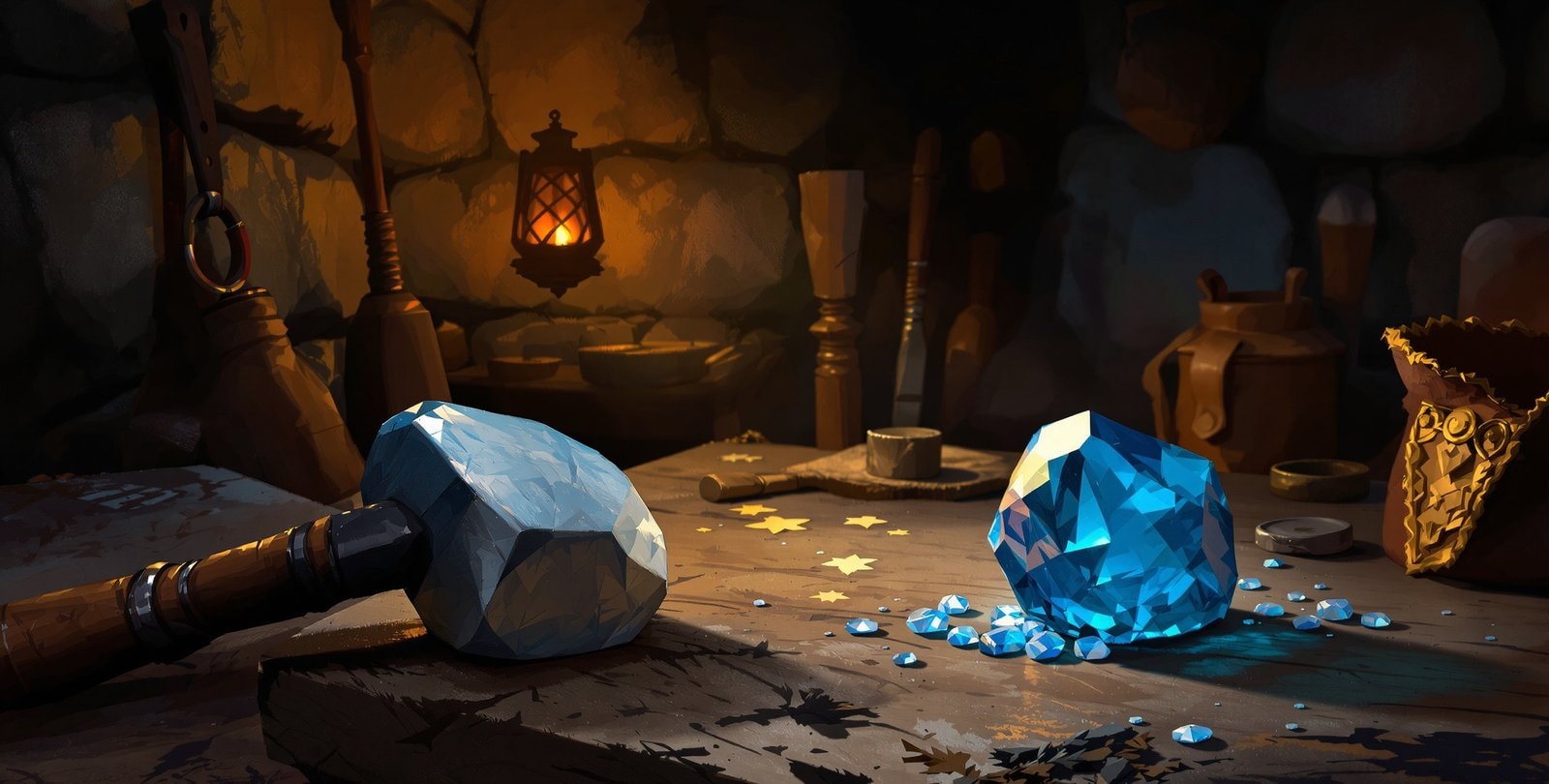
Every tile your miners remove becomes something. Most of it is ordinary stone: useful, plentiful and a little dull. But the rock is layered, and different layers hold different treasures. Learning to read those layers, and to know what each kind of stone is good for, is how a fortress grows from surviving to thriving.
Layers of rock
The ground beneath a site is arranged in broad layers: soil near the surface, then bands of different rock types stretching down towards the caverns. Each layer tends to hold certain kinds of stone and certain ores, much as real geology does. When you look at a site before settling, the game tells you something about what lies beneath; once you start digging, exploratory tunnels reveal the detail. The digging page covers the practical side.
Ordinary and economic stone
The game distinguishes between ordinary stone, which is good for building, and stone that has a particular industrial use. Ordinary stone becomes blocks, walls, doors, tables, statues and the countless small crafts your dwarves sell to traders. You will always have far more of it than you need.
Some stones are more useful kept for particular jobs: ores that yield metal, stones that make good glass or pottery, and certain limestone-type stones used in iron-making. By default, your dwarves are reluctant to use these for everyday building, and it is worth keeping it that way. There is nothing more frustrating than discovering your masons turned your only source of a key ingredient into bedroom furniture.
What an ore is
In the game, an ore is simply a stone from which metal can be smelted. The real-world definition is a little more demanding. Wikipedia's article on ore describes it as natural rock or sediment containing one or more valuable minerals, typically metals, concentrated above background levels and economically viable to mine and process, and notes that ore is usually extracted by mining and then refined, often by smelting, to recover the valuable part. The game keeps the essential idea: find the rock that carries metal, dig it out, heat it until the metal comes free.
Different ores yield different metals, and some yield more than one. Some metals are soft and decorative, useful for crafts and fine objects; others are hard and suited to tools, weapons and armour. Which ores your site holds shapes what your fortress can make.
Smelting
Smelting happens at a smelter, which heats ore until it gives up its metal as bars. Fuel-burning smelters consume charcoal or coal, which is why fuel is a constant concern for a metal-working fortress. Magma smelters use the heat of magma instead and run without fuel, which is the reason so many players dig for magma; the magma and forges page explains how.
Bars then go to a forge, where smiths turn them into finished goods. The chain is long: miners, haulers, charcoal burners or magma engineers, smelters, then weaponsmiths, armourers and metalcrafters. The skills and labours page follows it from end to end.
Alloys
Some metals are made by combining others. An alloy is smelted from two or more ingredients, which may be ores, bars or both. Alloys can be stronger, more valuable or simply more beautiful than their components. Because the recipes and the exact proportions differ by version, this guide does not list them; the official wiki keeps current details.
Iron and steel, in general terms
For most fortresses, the serious military metals are iron and, above all, steel. Iron is smelted from iron-bearing ores. Steel is harder to make: it involves iron, extra fuel and one of those limestone-type stones used in iron-making, processed through more than one stage. Getting a steel industry running requires a site with the right rocks, a good supply of fuel or magma, and a patient smith. It is a milestone for many fortresses, because steel weapons and armour make a real difference when the sieges arrive. The military page explains why.
If your site lacks iron altogether, trade is the answer. Caravans often bring metal bars and useful stone, and the trade page covers how to get what you need.
Gems
Gems appear as small clusters in certain rocks, and as larger deposits here and there. Rough gems are cut at a jeweller's workshop and then set into furniture, crafts and weapons, or used on their own as trade goods. Cut gems add greatly to the value of whatever they decorate, which pleases nobles and traders alike. Some gem types are far more valuable than others, and it can be worth keeping the best for special projects or for a dwarf in a strange mood who demands one.
Glass
Glass is made at a glass furnace from sand, and sometimes from other ingredients depending on the colour you want. It can be made into windows, containers, crafts and even building materials. Glass industries tend to be overlooked, but a fortress with plenty of sand and fuel, or a magma glass furnace, can produce a steady stream of valuable goods from very common materials.
Obsidian and other special stone
Some stones have special properties or uses. Obsidian, made when magma meets water, is a strong and attractive stone. Certain stones are especially valued for statues and decoration. As you play, you will learn which rocks you like best, and your dwarves will have their own opinions too, since each dwarf has favourite materials and is pleased to use and own them.
Practical habits
- Explore before you excavate; know what your site holds.
- Keep ores and special stones out of ordinary building jobs.
- Store plain stone somewhere out of the way, or turn it into blocks to reduce clutter.
- Plan your fuel, or your route to magma, before investing in a metal industry.
- Trade for what your mountain lacks rather than doing without.