Building
Magma: forges, furnaces and fire
Deep below the fortress lies an endless supply of heat. Harness it and your smiths never need fuel again. Mishandle it and it will cheerfully burn everything you own.
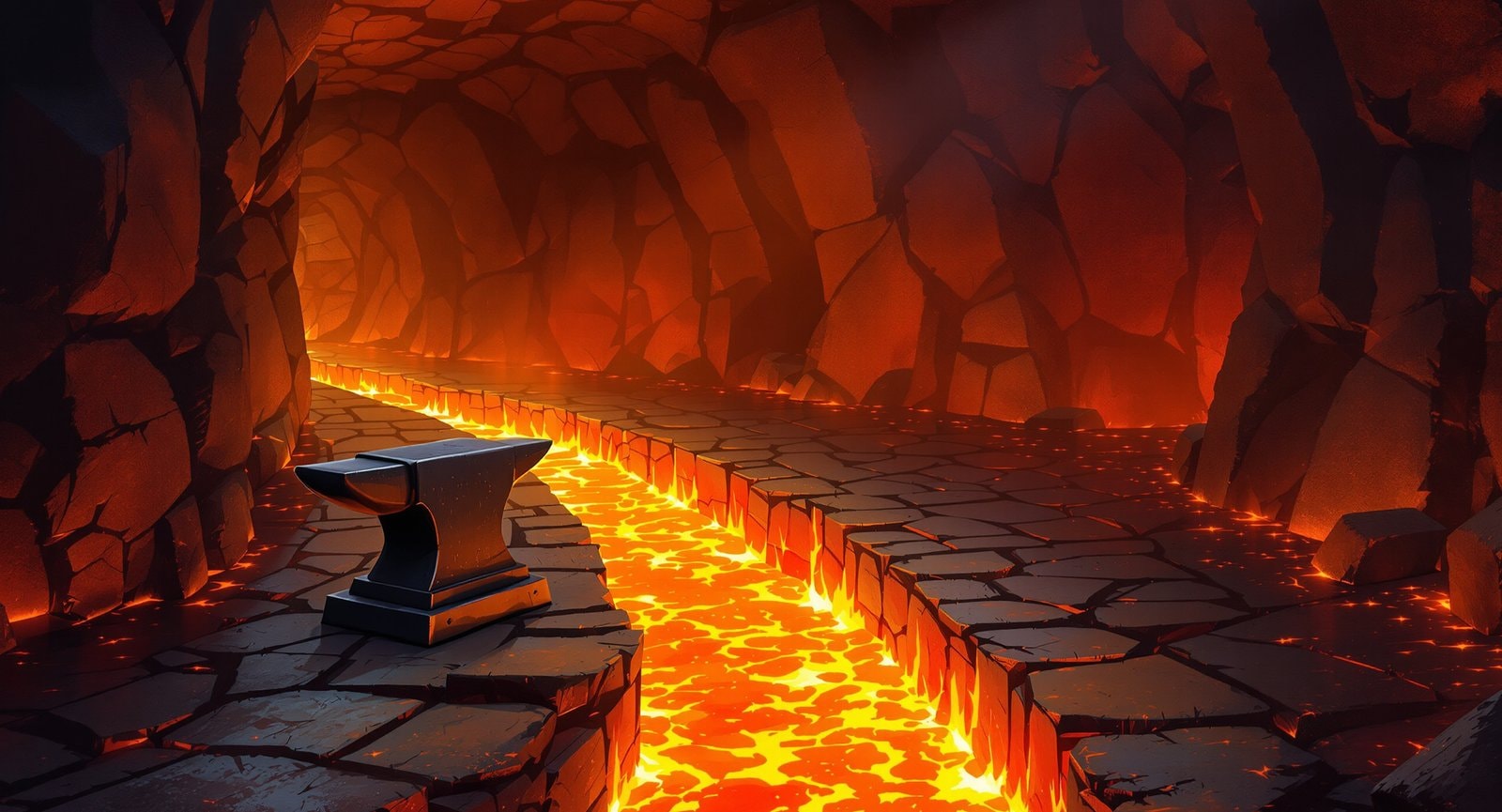
Most fortresses run their metal industry on fuel. Wood is burned into charcoal, or coal is mined, and both are consumed by every furnace and forge. It is a constant drain on labour and resources. Then, somewhere deep below, a dwarf digs into rock that glows. Magma changes the economy of a fortress, and for many players, reaching it is a defining goal.
What magma does in the game
The official wiki's magma page describes magma as red-hot molten rock rising from deep within the earth, and explains that its heat stands in for fuel in the magma versions of the smelter, forge, glass furnace and kiln. Build those workshops over a supply of magma and they run on it indefinitely. Your smiths and smelters stop waiting for charcoal, and the woodcutters stop clearing forests to feed them.
The same page notes that magma never cools on its own and that, when it meets water, it forms obsidian. That reaction is both a hazard and a resource. Obsidian is a useful stone, and some players produce it deliberately by bringing controlled amounts of magma and water together. The page also notes that magma which surfaces is called lava, though the substance is the same.
Finding it
There are two usual sources. The first is the magma sea, far below the caverns at the bottom of the world, which every fortress can eventually reach by digging deep enough. The second is a volcano or magma pipe, a column of magma rising through the rock, found at some sites. Embarking near a volcano gives you magma close to the surface from the very start, at the price of living next to a volcano. The digging page covers the descent.
Magma-safe materials
Magma is extremely hot, and anything that touches it must be able to take the heat. The official page calls materials that withstand magma's temperature magma-safe and notes that the list is rather extensive. The concept matters because building the wrong thing out of the wrong material near magma can end badly: a floodgate or pump that melts, a bridge that burns, a mechanism that fails at the moment you need it.
The rule of thumb is simple. Anything that will be in contact with magma, especially anything that holds it back or moves it, must be made from a material the game treats as magma-safe. Many kinds of stone qualify, as do some metals; plenty of common materials do not. Because the exact list depends on the version, check the official wiki before committing a design, and test it before trusting it.
Fire and heat
Magma sets fire to things. Wooden furniture, cloth, plants and creatures near a leak can ignite, and fire spreads. Heat alone can be dangerous even without direct contact. Dwarves who walk through burning areas are injured or killed; smoke and panic cause further trouble. A magma leak in a crowded area is one of the classic ways fortresses fall, alongside the floods on the water page and the tantrums on the losing is fun page.
- Keep magma workshops apart. Put them in their own wing, separated from living areas and stockpiles of flammable goods.
- Use floodgates made from magma-safe materials on every channel that carries magma, linked to levers you can reach quickly.
- Build in stone. Keep wooden furniture and cloth well away from anything hot.
- Test with the area empty. Open a new magma channel only when nobody is nearby, and watch what happens.
Moving magma
Sometimes the magma is not where you want it. Pumps built from magma-safe materials can lift magma just as they lift water, and whole pump stacks have been built to bring it up from the depths to a convenient working level. This is a significant engineering project, involving power, careful material choices and a great deal of testing. The mechanisms and power page covers the machinery, and the megaprojects page covers the scale some players take it to.
Magma in defence
Inevitably, players have realised that a substance which burns everything it touches might be pointed at attackers. Magma moats, channels that can be opened onto an approach, and similar arrangements appear in many famous fortresses. They are dramatic, and they are also some of the riskiest things you can build, because the magma does not distinguish between invaders and whoever forgot to leave the corridor. Master the peaceful uses first.
The real thing
Real magma is a remarkable substance in its own right. Wikipedia's article on magma describes it as the molten or semi-molten natural material from which all igneous rocks form, found beneath the surface of the Earth and sometimes containing suspended crystals and gas bubbles. The same article explains that magma rising through the crust may feed a volcano and erupt as lava, or solidify underground. It also notes that calling it lava while it is still underground is common but, strictly, incorrect. The game's distinction between magma below and lava above follows the same idea.
Where to go next
Magma is the heart of a serious metal industry, and what you can make with it depends on what you can mine. The stone, ore and metal page explains ores, smelting and alloys, and the skills and labours page covers the smiths who turn it all into weapons, armour and fine goods.