Building
Water: wells, pumps, irrigation and floods
Water gives your fortress drink, farms, power and hospitals. It also drowns miners, floods storerooms and ends fortresses. Learning to respect it is a rite of passage.
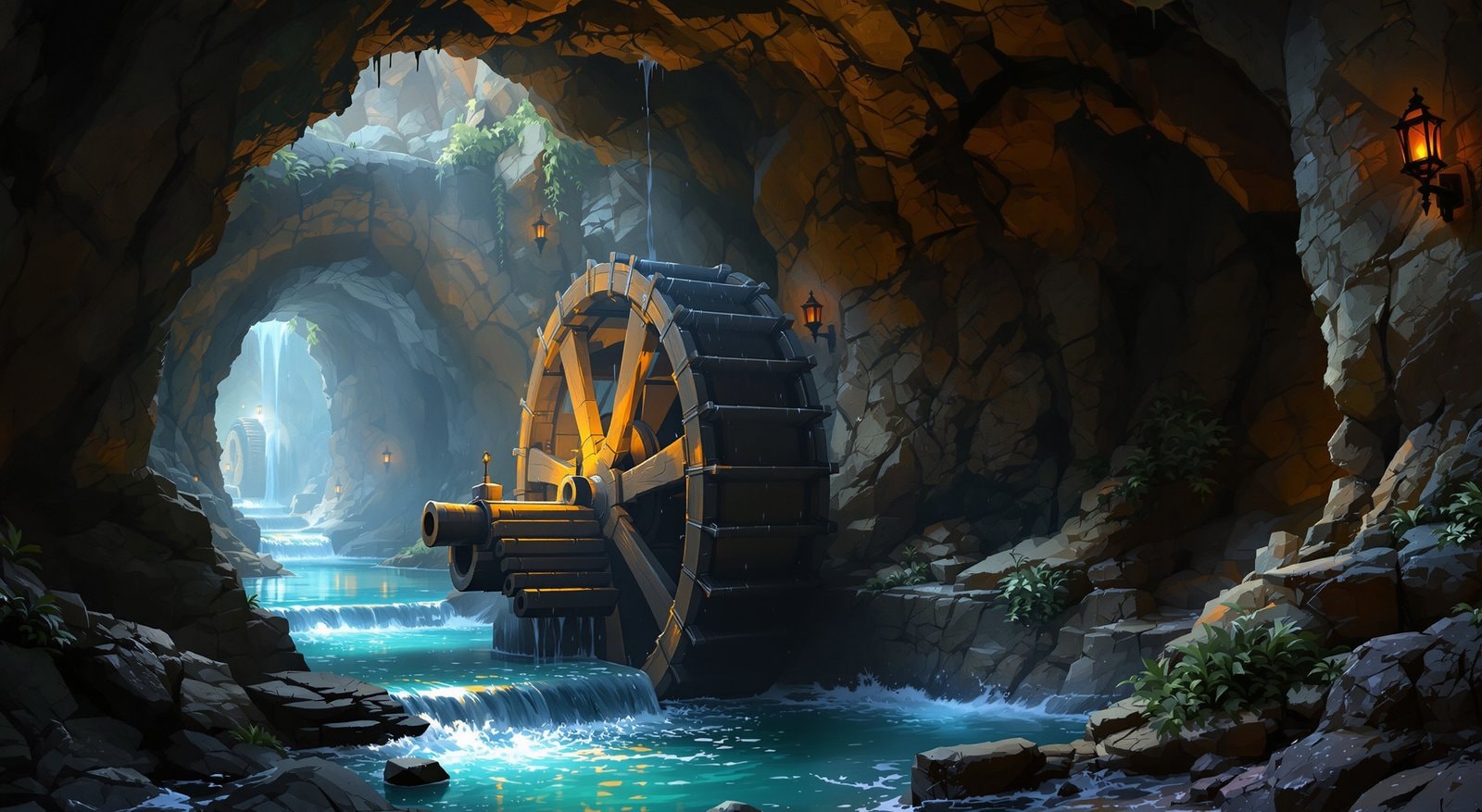
No material in the game causes more joy and more grief than water. It turns wheels, fills wells, washes wounds, feeds crops and forms moats. It also flows wherever it can, fills every space it reaches and takes no notice of your plans. Almost every veteran has a story about a single misplaced channel that emptied a river into the dining hall. The aim of this page is to make sure your story is a funny one rather than a final one.
How water behaves
The game models water as a fluid that spreads from tile to tile, settling at different depths. Shallow water is harmless. Deep water is where dwarves drown. Water flows downhill, fills whatever hollows it finds, and will pour down an open staircase into every level below. It freezes in cold weather and thaws again when spring comes, which can turn a safe winter crossing into a sudden river.
Water can also be under pressure. When it falls from a height or is pushed by a pump, it can rise back up on the far side of a channel rather than simply spreading out. The details are complicated and worth looking up on the official wiki if you plan anything ambitious, but the practical lesson is simple: water can go up as well as down, so an arrangement that looks safe because the room is higher than the river may not be.
Wells
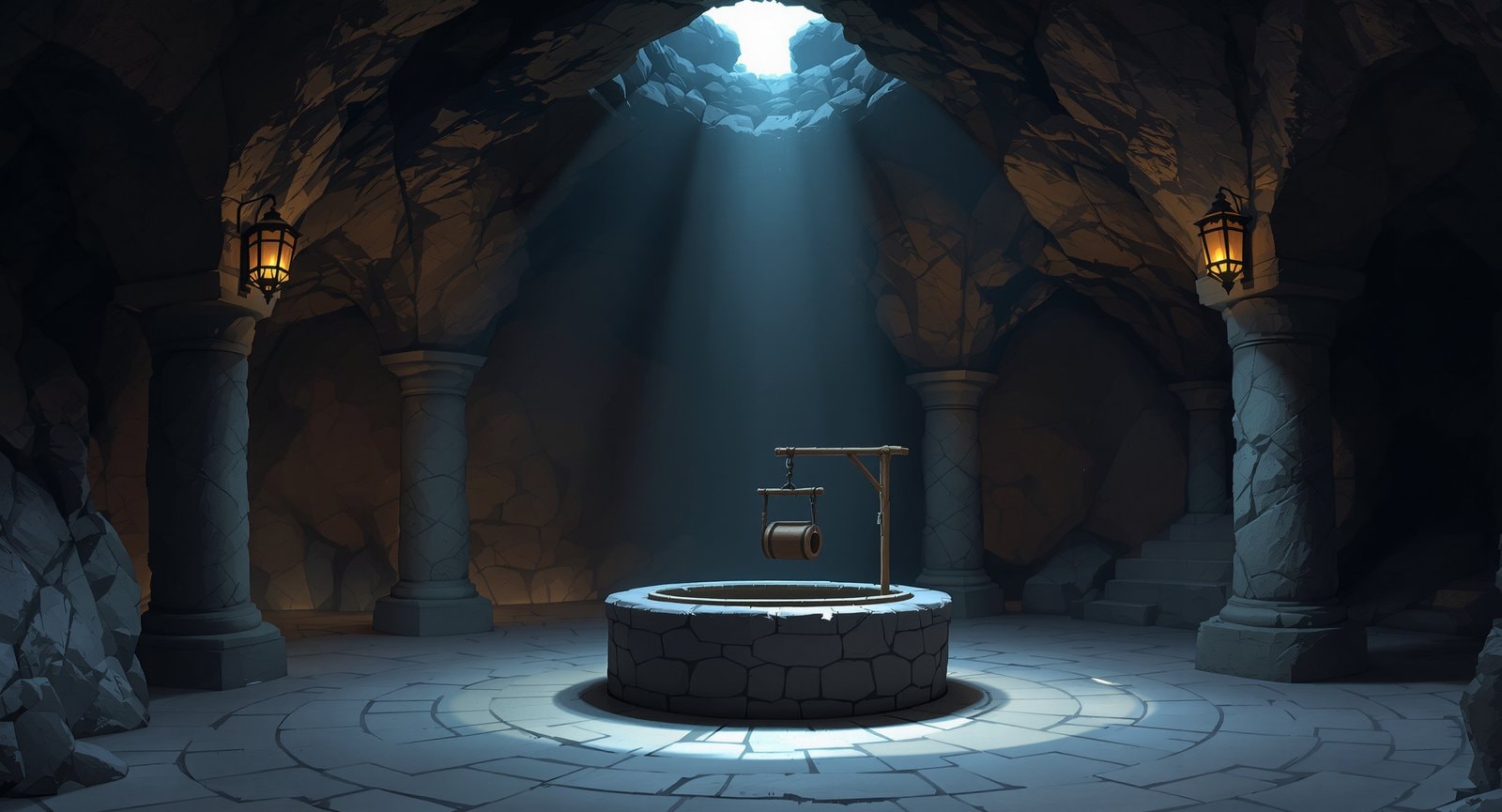
A well is the simplest way to give dwarves access to water indoors. It sits over a source of water below, and dwarves use it for drinking in a pinch and, more importantly, for the hospital, where water is used to clean wounds. The usual design is a small shaft over a channelled cistern or an underground stream, with a well built on top. A fortress with a well in a quiet central courtyard has one less thing to worry about when winter freezes the river.
Screw pumps
The official wiki's screw pump page describes the pump as a small building that can lift water or magma up to its own level, worked either by hand or by machine power, and notes that running salty or stagnant water through a pump leaves it clean. That last property makes pumps useful even in fortresses that do not need to move water anywhere in particular, because they can turn a brackish supply into something drinkable.
A single pump lifts water one level. To raise it further, players stack pumps one above another, each feeding the next. Driving a stack by hand needs a dwarf at every pump; driving it by machine needs a water wheel or windmill and a line of axles, which the mechanisms and power page covers. The same page on pumps warns that a pump's output side can fill to the top of its level, which is a polite way of saying that a careless pump will flood whatever is next to it.
Muddy floors and farms
Underground farms need soil. Where there is none, bare stone can be made farmable by briefly flooding it so that it becomes muddy. The idea is to let a little water spread across the floor, then drain it away or let it evaporate, leaving a layer of mud behind. Done carefully, this turns a stone cellar into a field. Done carelessly, it turns a stone cellar into a lake. The farming page explains what grows there once the mud is down.
This is a small, dwarven version of something people have done for a very long time. Wikipedia's article on irrigation describes it as applying controlled amounts of water to land to help grow crops, and says it has been a key part of agriculture for over 5,000 years. The key word, in both cases, is controlled.
Floods, and how to avoid them
Most floods have the same few causes. A miner digs a channel into a river or lake. An aquifer layer is breached from below. A floodgate is opened before the space beyond is ready. A pump runs without anyone checking where its output goes. Ice melts in spring. None of these are exotic; all of them are avoidable.
- Plan the water's whole route before you open anything: where it comes in, where it goes, and where it stops.
- Put a floodgate on every intake, linked to a lever, so you can shut off the supply instantly.
- Keep a drain. A deep pit or channel somewhere safe, where excess water can go, saves many a fortress.
- Test with nobody nearby. Fill new channels and cisterns when miners and haulers are elsewhere.
- Close the stairs. A hatch or door on a staircase stops a flood on one level becoming a flood on every level below it.
Drowning
Dwarves can drown in deep water, and the most common victims are miners who were digging the very channel that let the water in. Plan digging so that the last tile between your workers and the water is removed from a safe side, or by a method that lets them walk away before the water arrives. The official wiki has several well-tested approaches for particular situations. The digging page covers the related danger of water-bearing rock.
Water as a tool
Once you are comfortable with it, water opens up many possibilities: moats that stop attackers, cisterns that supply wells through a siege, power for machines, cooling for magma to make obsidian, even whole working logic circuits. Start small, keep a floodgate between you and every source, and water will become one of the most useful things in your fortress.